A Boy, a Flower, and the Quiet Charm of Sketch-Style Embroidery
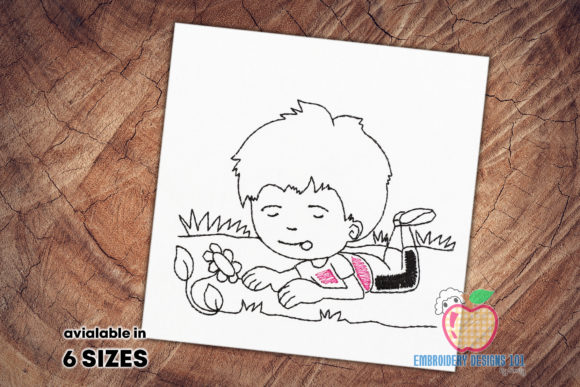
When a design like ‘Boy Looking at Flower Sketch’ lands in my library, my first move isn’t to stitch it—it’s to sit with it. As a designer and reviewer, I see beyond the pixels; I imagine the thread. This particular embroidery design immediately presents itself not as a loud statement, but as a gentle whisper. It carries that soft, hand-drawn sketch quality, a simple and tender moment captured in line work. The mood is contemplative, innocent, and undeniably sweet. It doesn’t scream for attention; it invites a closer look.
The Visual Personality: Where This Sketch Belongs
The layout is straightforward—a central figure, a singular focus. This isn’t a complex scene, which is its strength. The detail level is deliberately light, with open spaces implied by the sketch lines rather than densely filled. This creates a specific visual personality: it’s approachable, a bit nostalgic, and feels handmade even before it’s stitched. Because of that, I can instantly visualize it thriving on a certain category of projects.
Think of a custom tote bag for a gardener, a lightweight cotton apron for a boutique, or a delicate pillow cover in a nursery. It would shine on a baby’s organic cotton romper as a subtle, charming accent. This isn’t a design for a corporate logo or a bold sports cap; it’s for products where the story is gentle, personal, and heartwarming. I’d lean towards natural fabrics like linen, cotton, or bamboo blends—textures that complement the sketch-like aesthetic, rather than fight it.
Performance in Real-World Projects: A Practical Walkthrough
Let’s get practical. I’m considering this for a real client request: a personalized set of kitchen towels as a wedding gift. The client wants something unique but not overly fussy. ‘Boy Looking at Flower Sketch’ comes to mind. Its theme is universal—curiosity, simplicity, nature—and its execution is likely ‘quick stitch,’ as noted, which is perfect for a smaller, decorative item.
On a tea towel, the design’s open, not-fully-filled areas are an advantage. They’ll stitch out faster, use less thread, and won’t create a stiff, dense patch that makes the towel impractical to use. The lighter stitch density means it will remain flexible and drape nicely on the fabric. This is a key insight for apparel decorators and small shop owners: a design that isn’t 100% filled can be a gift for comfort and wearability on garments like t-shirts or lightweight sweatshirts, where heavy embroidery can feel bulky.
For crafters and Etsy sellers creating embroidered patches, this sketch style could translate beautifully. The clear lines would define the patch edges well, and the thematic sweetness could make it a popular choice for patch collections on backpacks or journals. In a craft fair setting, I imagine this design on a simple, embroidered baby bib catching a parent’s eye—it tells a story without being overwhelming.
Where to Exercise a Bit of Caution
Every design has its ideal canvas, and knowing where to be careful builds customer trust and professional results. For ‘Boy Looking at Flower Sketch,’ the sketch lines and presumably finer details mean you must be mindful of scale.
If offered in very small hoop sizes, the delicate lines might lose clarity, becoming blurry or merging. Test it first. On textured fabrics like thick terrycloth or looped blankets, those same fine lines could get lost in the fabric’s hills and valleys. Similarly, on stretchy fabrics without proper stabilizer, the design could distort. Dark fabric presents its own classic challenge: the contrast needs to be high. You might need to opt for bright, light thread colors to ensure the sketch pops and doesn’t look muddy.
Curved surfaces like caps are tricky for any design, but for one with a centered, quiet composition like this, it could work on the front panel if the size is appropriate. Just be sure to use a cap-friendly stabilizer and hoop. Finally, for products destined for frequent washing—like kids’ clothes or kitchen linens—the less dense fill is again a benefit, as it’s less prone to abrasion wear, but always recommend gentle care to your customers.
Impact on Value, Presentation, and Buyer Engagement
From a business perspective, how does this embroidery file affect the finished product? For handmade shops and creative entrepreneurs, this design adds a specific kind of value: emotional resonance. It’s giftable. It feels personal. A sweatshirt embroidered with this sketch isn’t just apparel; it’s a sentiment. That boosts perceived value and can enhance brand consistency for a boutique that curates a gentle, story-driven aesthetic.
The stitching clarity, if executed well on suitable fabric, communicates professionalism. It shows care. In Etsy listings or printable mockups, a clean stitch-out of this design against a neutral background looks classic and appealing. It engages buyers who are looking for that ‘not-quite-perfect, perfectly-heartfelt’ style. It won’t attract everyone, but it will deeply attract the right audience.
Essential Designer Notes Before You Hoop Up
Before you commit this to a client’s project or your next batch of merchandise, run through these real-world checks. They’ve saved me countless times.
- Stitch it out on scrap fabric first—the same fabric you plan to use. This reveals everything: actual thread consumption, how the sketch lines look with your chosen thread weight, and any potential hiccups.
- Check thread color contrast against your final fabric, both light and dark backgrounds. Does the palette need adjusting to keep the sketch feeling light and clear?
- Review the stitch density in the test run. Is it appropriately light for your intended product? Too dense for a delicate baby blanket? Too sparse for a sturdy tote?
- Confirm the hoop size you’ll use matches a size provided in the design’s details. Never assume.
- Inspect the small details, like the boy’s expression and the flower outline. Are they distinct? This is crucial for visual appeal.
- Use proper stabilizer. Even with lighter fills, stabilizer is non-negotiable for clean results, especially on apparel or stretchy materials.
- If you’re selling the finished items, check the licensing terms for this digital embroidery file. Is it for personal use only, or commercial? This is a fundamental step for any craft business or digital product seller.
The ‘Boy Looking at Flower Sketch’ embroidery design is a tool. Its value isn’t just in the file itself, but in the thoughtful application by the maker. It asks for a considered approach—pairing it with the right project, the right fabric, and the right intention. When you do that, it rewards you with a finished product that carries a quiet, charming story, stitched into something truly special.